
Excavation contractor in Smithfield, NSW
Digging in Smithfield, from the hill to Prospect Creek
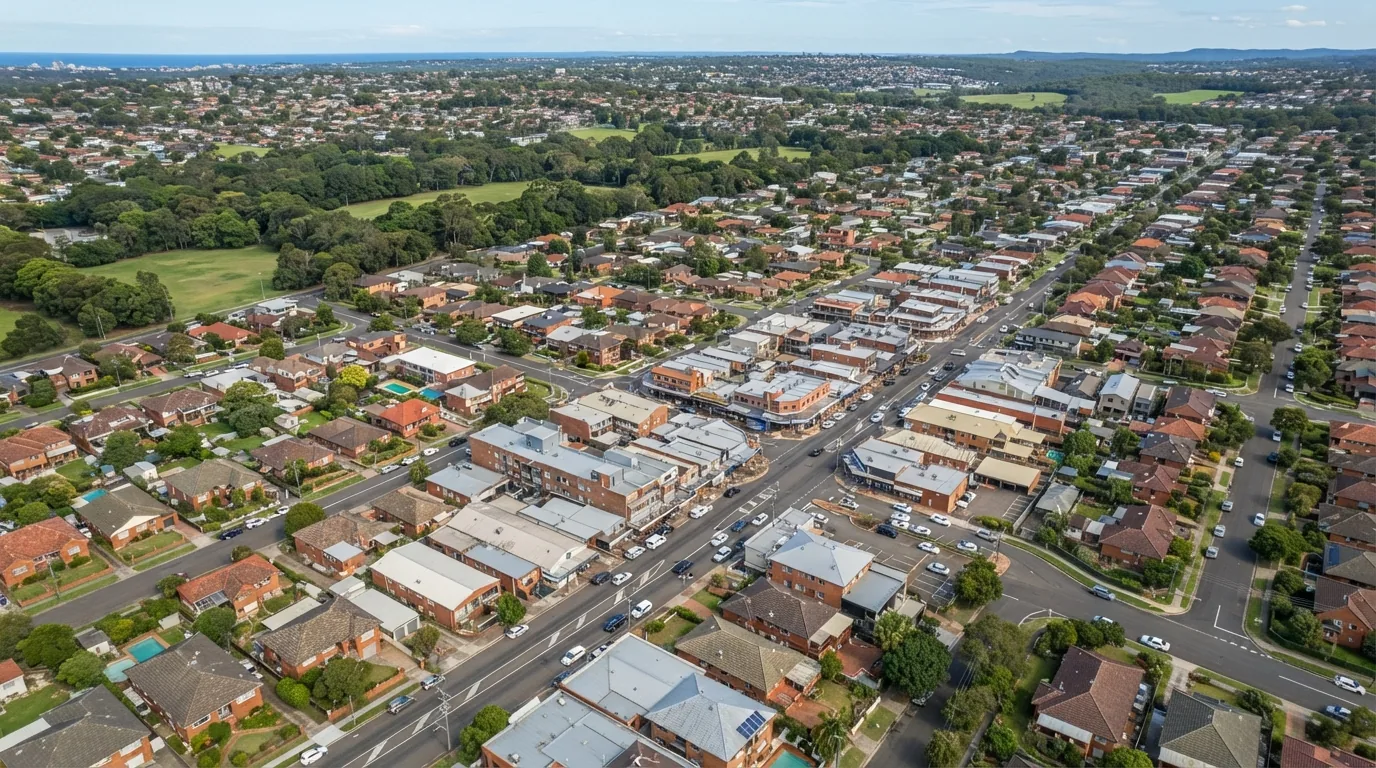
Smithfield is one of the older parts of Western Sydney. It was laid out on a grid in 1838, and many of those street names survive. Today about three in four homes are separate houses, with The Horsley Drive as the shopping strip and the Cumberland Highway carrying through traffic. Prospect Creek runs across the suburb and forms the boundary between Fairfield City and Cumberland councils, and the land north of the creek is industrial with no housing at all. Most of our work here is on house blocks south of the creek.
Smithfield is not flat. Ground level rises from about 20 metres near the creek to about 55 metres on the higher streets, so some blocks fall away from the road or towards the back fence. On a sloping block the tipper stays on the street or at the top of the driveway, and the mini excavator works down the side passage on a level track we cut for it. The Horsley Drive and the Cumberland Highway are too busy for a truck to stand on, so jobs fronting them are loaded from a side street or under a traffic plan.
Housing here spans many decades, from a few heritage-listed slab cottages to post-war houses, including the former Kaluna vineyard land subdivided in 1959, and newer duplexes on redeveloped lots. The higher ground is shale clay. Closer to Prospect Creek the soil is creek silt and clay, wetter and softer, and council's flood studies map overland flow paths and flood-affected properties in the lower streets. If old fibro sheeting is in the way, it has to be tested for asbestos before anything is broken, and we stop and tell you.
What we do here most
What Smithfield keeps needing
Water ties these together: where it runs across Smithfield's slopes, where it gathers near Prospect Creek and what it does to the clay.
Site Preparation & Site Cuts
Benching a sloping block for a duplex
Where an older Smithfield house has come down for a duplex on a sloping lot, the builder needs a level platform. We cut the high side into the clay, leave a batter or room for the retaining wall, and take the spoil away in the tipper. The cut follows the levels on the survey. If the cut reaches weathered shale, we tell the builder the depth before going further.
Plumbing & Drainage Trenching
Diverting overland flow around a house
In parts of the lower catchment north of The Horsley Drive, council's overland flood study shows water crossing private yards in heavy rain. Where an engineer designs a diversion, we dig the swale or trench, lay the pipe to the grade on the plan and set grated pits at each end. The plumber connects it to the stormwater system. Every cut keeps to the drawing, because flow paths are part of council's flood planning.
Strip outs and demolition
Clearing an old garage before a granny flat
Older Smithfield blocks often have a back garage or shed that has stood for decades. Before anything is broken, any fibro sheeting is tested for asbestos, and if the result is positive we stop and tell you, because that removal is a separate job for others. Once the area is clear, we take down the frame and slab, sort concrete, steel and timber, and leave the ground level.
Sewer & Water Service Trenching
Replacing a cracked sewer line under the yard
Old sewer pipes under Smithfield's established yards crack as the clay shrinks and swells, and tree roots find the joints. We get the service plans, dig along the old line and lay the new pipe on bedding to the grade the plumber gives. The plumber makes the connections and arranges the sign-off. Then we backfill, compact and put the turf back.
If it is urgent
If a trench floods or collapses in Smithfield
- 1Keep everyone back from the trench edge, and if a water pipe has burst, turn it off at the meter near the front boundary.
- 2Do not wade into a flooded trench or try to pump it out yourself, and do not touch any exposed cable.
- 3Tell us whether you are on the Fairfield or the Cumberland side of Prospect Creek, how close the job is to the creek and whether it is still raining, since water gathers in the lower streets.
Common questions
Frequently Asked Questions
What size jobs do you take on?
Small residential jobs through to larger civil and infrastructure work. A single trench across a front lawn, a set of footings for an extension, a bulk cut for a new slab and the underground services for a commercial site are all jobs we do.
Can your machine get into a narrow side passage?
Usually, yes. A mini excavator fits through most gates and side passages that a larger machine cannot. Send a photo of the narrowest point with a tape measure across it, and we will tell you whether the machine fits or whether that part has to be dug by hand.
Do you connect the power, water or sewer once the trench is dug?
No. We do the civil side: digging the trench to depth, bedding, laying the conduit or pipe, installing pits, backfilling and reinstating. The connection, testing and sign-off are done by an electrician or a plumber, and we work around their timing.
What is non-destructive digging, and when do I need it?
It means opening the ground with water and vacuum, or by hand, instead of a bucket. It is used where cables, gas lines or water mains are close to the dig, so they can be found and exposed without being damaged.
Do you take the spoil away?
Where the job calls for it, yes. Spoil is loaded into a tipper and taken off site. Where it can be reused on the block for backfill or levelling, we talk about that with you first, because it changes how much leaves the site.
What if you hit rock or old fill?
How deep the rock sits, and whether there is buried rubble or old fill, only shows once the bucket is in the ground. If we find something that changes the job, we stop and tell you before the work carries on.
Do you check for underground services before digging?
Every time. We get the underground service plans for the site before we dig, through Before You Dig Australia, and anything close to the line is exposed by hand or vacuum before a machine works near it.
Do you do strip outs and demolition?
Yes, including bathroom strip outs and wider internal strip outs. If old sheeting or materials might contain asbestos, they have to be tested before anything is broken. If that is the case, we stop and tell you, because we do not remove asbestos.
Can you level a yard and lay turf?
Yes. Landscaping covers clearing, levelling and grading the ground so water runs away from the house, building up garden beds and edges, and laying turf once the ground is ready.
Do you need the engineer's plans?
For footings, slab cuts and bulk excavation, yes. The engineer's plans set the depth, width and position of what we dig. For a trench or a landscaping job, a site plan or a few photos are usually enough.
Can I call you outside business hours?
Yes. We answer the phone at any hour, every day. If a trench has collapsed or a pipe has been hit, tell us the suburb and what has happened, and keep people back from the edge until we talk.
Which areas do you cover?
We travel across Sydney, from the CBD and inner south to Parramatta, Western Sydney, the south-west, and St George and Sutherland. If your suburb is not on our list, ask anyway.
Everything we do here
Services in Smithfield, NSW
These services match what Smithfield's slopes, creek-side clay and older housing keep calling for, from site cuts to sewer line replacement.
Also nearby
We work in these suburbs too
Local, and on the phone
Planning a dig in Smithfield
Send us one photo of the block taken from the street and another from the back fence, so we can see the slope and where water runs. In Smithfield the fall of the land decides where the truck stands, where the spoil goes and whether drainage has to be part of the job.
0485 057 31224 hours a day, 7 days a week
Not urgent? Send us the job instead