
Excavation contractor in Erskine Park, NSW
Erskine Park's 1990s blocks and the creek edge
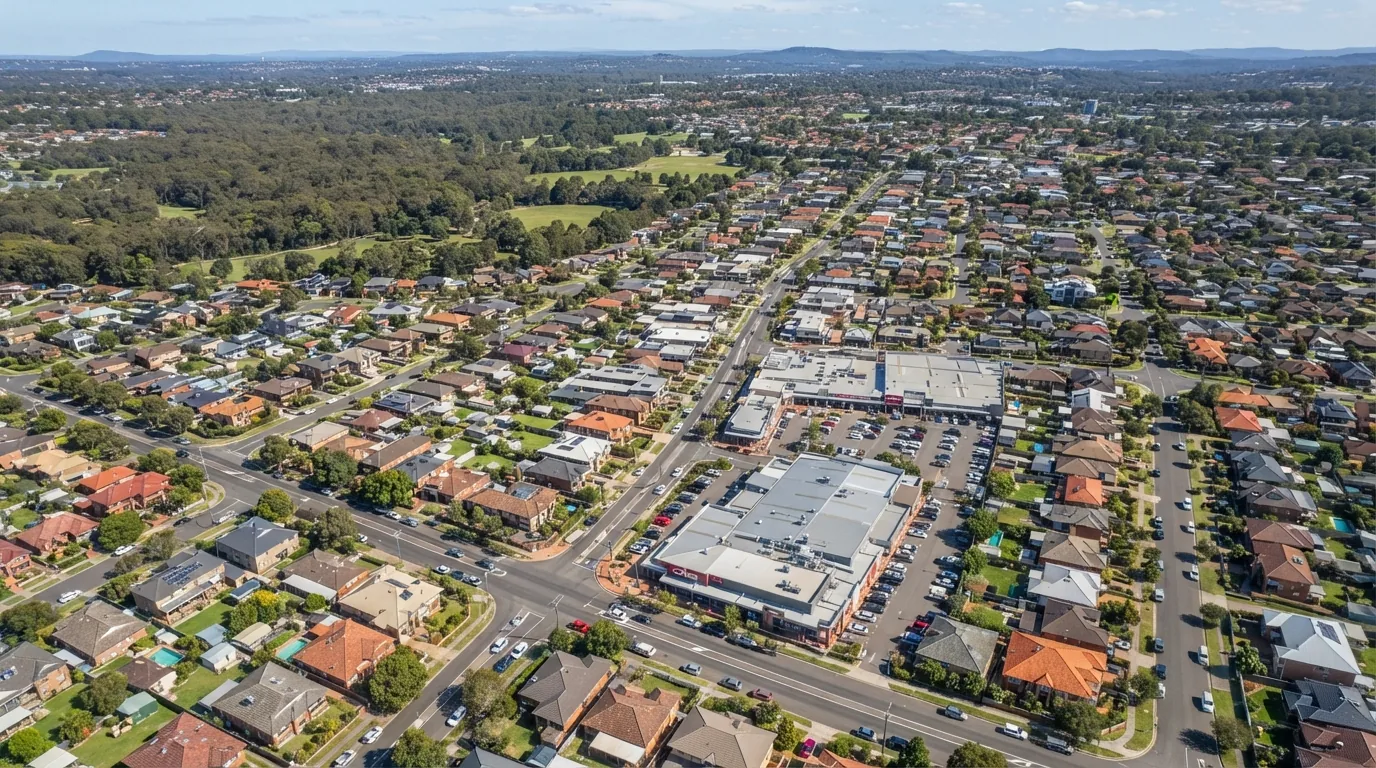
Erskine Park was mostly rural land until the housing development of the 1990s, so its streets are younger than those in St Marys or Penrith. Ropes Creek forms the eastern boundary, the Sydney Water supply pipeline corridor runs along the south, and Mamre Road and Erskine Park Road form the western edge. The employment area, planned and gazetted in 1992, holds large warehouses and distribution centres on the southern side. Most of our work here is in the backyards and side paths of the houses, with service trenching in the employment area.
Most Erskine Park backyards are reached only by the path beside the house, with the garage taking up the other side. The mini excavator goes down that path on boards and the spoil comes back out by mini loader to a tipper standing at the kerb, with neighbours' driveways kept clear. A fence panel sometimes has to come down, and we agree that with you before the day. In the employment area, our truck shares the road with semi-trailers coming off the M4 and M7, and most sites need an induction before we come through the gate.
The houses are mostly brick homes on concrete slabs, built on the Wianamatta shale clay of the Cumberland Plain. This clay swells in a wet winter and shrinks in a dry summer, so we keep new trenches away from slab edges where we can and backfill properly where we cannot. Water does not soak away in this clay, it sits. Along Ropes Creek the ground is softer creek sediment, and parts of the south were quarried before the parkland and estates were built, so fill turns up where you might not expect it.
What we do here most
What Erskine Park's backyards keep needing
The houses here are about thirty years old, the age when the original yards, drains and landscaping start to need redoing, often with something new built out the back at the same time.
Tight Access Excavation
Getting a mini excavator down the side path
Most Erskine Park backyards are only reached by the narrow path beside the house. We measure it at its tightest point, lay boards to protect the paving, and walk the mini excavator through. The gas and water meters along that path are located and protected before the machine moves. Spoil comes back out by mini loader to the tipper in the street, so nothing is carried through the house.
Landscaping
Rebuilding a tired 1990s backyard from the ground
Lawns and garden beds laid when these houses were new have often sunk, cracked or been taken over by roots, and on this clay a lawn can stay wet for days after rain. We dig out the old beds, cut the levels so water runs away from the house to a pit, and build low retaining walls where the yard steps. Then we spread a sandy loam topsoil and lay new turf rolls.
Electrical Cable Trenching
Power to a backyard studio or workshop
A studio, granny flat or workshop at the back of an Erskine Park block needs a cable run from the house. We trench from the house to the new building at the depth the electrician specifies, lay the conduit with warning tape above it, and backfill and compact the trench. The lawn or paving is put back over it. The electrician pulls the cable, makes the connections and tests it.
Underground Utility Trenching
Service trenches for new employment area units
New units and warehouses in the Erskine Park employment area need water, power, telecommunications and stormwater brought in from the street. We get the service plans, pothole any services we have to cross, and cut the trenches to the depths and separations on the drawings. Pipe and conduit go into bedding sand and the trench is backfilled in compacted layers. The plumber and the electrician make the connections.
If it is urgent
If a trench caves in or a pipe bursts in Erskine Park
- 1Keep children and pets inside, and turn off the water at the meter, which is usually near the front boundary.
- 2Leave any exposed cable or pipe alone, and do not try to dig it out or bury it again yourself.
- 3When you call, tell us the street, whether the property backs onto Ropes Creek or the pipeline corridor, and how the backyard is reached.
Common questions
Frequently Asked Questions
What size jobs do you take on?
Small residential jobs through to larger civil and infrastructure work. A single trench across a front lawn, a set of footings for an extension, a bulk cut for a new slab and the underground services for a commercial site are all jobs we do.
Can your machine get into a narrow side passage?
Usually, yes. A mini excavator fits through most gates and side passages that a larger machine cannot. Send a photo of the narrowest point with a tape measure across it, and we will tell you whether the machine fits or whether that part has to be dug by hand.
Do you connect the power, water or sewer once the trench is dug?
No. We do the civil side: digging the trench to depth, bedding, laying the conduit or pipe, installing pits, backfilling and reinstating. The connection, testing and sign-off are done by an electrician or a plumber, and we work around their timing.
What is non-destructive digging, and when do I need it?
It means opening the ground with water and vacuum, or by hand, instead of a bucket. It is used where cables, gas lines or water mains are close to the dig, so they can be found and exposed without being damaged.
Do you take the spoil away?
Where the job calls for it, yes. Spoil is loaded into a tipper and taken off site. Where it can be reused on the block for backfill or levelling, we talk about that with you first, because it changes how much leaves the site.
What if you hit rock or old fill?
How deep the rock sits, and whether there is buried rubble or old fill, only shows once the bucket is in the ground. If we find something that changes the job, we stop and tell you before the work carries on.
Do you check for underground services before digging?
Every time. We get the underground service plans for the site before we dig, through Before You Dig Australia, and anything close to the line is exposed by hand or vacuum before a machine works near it.
Do you do strip outs and demolition?
Yes, including bathroom strip outs and wider internal strip outs. If old sheeting or materials might contain asbestos, they have to be tested before anything is broken. If that is the case, we stop and tell you, because we do not remove asbestos.
Can you level a yard and lay turf?
Yes. Landscaping covers clearing, levelling and grading the ground so water runs away from the house, building up garden beds and edges, and laying turf once the ground is ready.
Do you need the engineer's plans?
For footings, slab cuts and bulk excavation, yes. The engineer's plans set the depth, width and position of what we dig. For a trench or a landscaping job, a site plan or a few photos are usually enough.
Can I call you outside business hours?
Yes. We answer the phone at any hour, every day. If a trench has collapsed or a pipe has been hit, tell us the suburb and what has happened, and keep people back from the edge until we talk.
Which areas do you cover?
We travel across Sydney, from the CBD and inner south to Parramatta, Western Sydney, the south-west, and St George and Sutherland. If your suburb is not on our list, ask anyway.
Everything we do here
Services in Erskine Park, NSW
The services below are worked out for clay that holds water, side paths that set the size of the machine, and the creek and pipeline edges of this suburb.
Also nearby
We work in these suburbs too
Local, and on the phone
Booking backyard work in Erskine Park
Send us a photo of the side path with a tape measure held across it at its narrowest point. That one measurement tells us whether the mini excavator walks in or the job is dug by hand and mini loader. It takes a minute to send.
0485 057 31224 hours a day, 7 days a week
Not urgent? Send us the job instead