
Excavation contractor in Silverwater, NSW
Digging on Silverwater's river flats
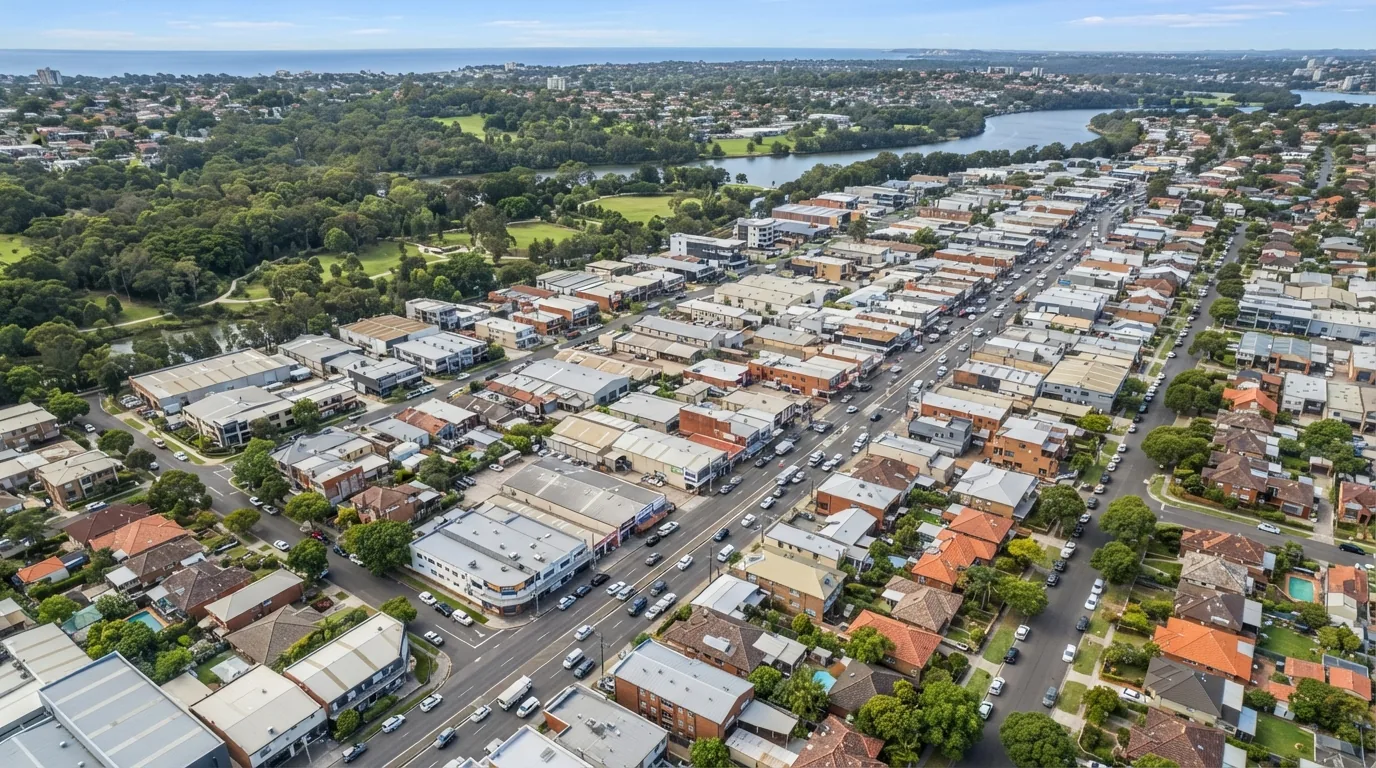
Silverwater sits in a pocket between the Parramatta River to the north and the Duck River to the west, with Newington to the east and the M4 to the south. It is mostly industrial, with factories, warehouses and depots, many of them on the same sites for more than fifty years, plus a few residential pockets and the correctional complex on Holker Street. So most of our work here is in factory yards: service trenches, stormwater lines and pits, ground preparation for new hardstand, and the occasional house job in the streets that remain.
Most factory sites have truck gates and hardstand, so a tipper can come in off the street, though some older lots are narrow with buildings close to the boundary. Silverwater Road carries traffic over the river on the Silverwater Bridge, and it is no place to stop a truck, so we plan our entry from a side street. Yard work is often booked for evenings or weekends, when deliveries stop and the gate is clear, which suits us because we work at any hour.
Much of the ground near the rivers is fill over soft estuarine silt and clay, with shale further down. The river marshes here were worked for salt in the early 1800s, and much of the river edge has since been filled and built over. On the lowest sites water can sit close to the surface, so deeper trenches may need pumping and shoring. Low land beside Sydney's estuaries is commonly mapped for acid sulfate soils, which can mean testing before digging. Old fill can hold anything from brick to fibro, and if we find suspect sheeting we stop and have it tested.
What we do here most
What Silverwater keeps needing
Each of these jobs deals with soft, wet ground under old factory yards, where what lies beneath the concrete is only known once it is opened.
Potholing & Underground Service Exposure
Finding old services under a factory yard
Silverwater yards have been rebuilt and resurfaced many times, and the plans rarely match what is under the concrete. Before a new trench, we get the service plans and dig small potholes at each crossing to find the true depth and position of each line. Every exposed service is measured and marked. That record goes to you and the designer before the full trench is dug.
Backfilling, Compaction & Site Reinstatement
Firming soft ground under a new hardstand
Hardstand laid on Silverwater's river silt sinks and cracks where the base was too thin. We dig out the soft material to the depth the engineer sets, keep the excavation dry, then place crushed rock in layers and compact each one. The surface is left ready for concrete or asphalt by others. If wet clay runs deeper than planned, we stop and you hear about it before more rock goes in.
Trenchless Underground Boring (Grundomat)
Boring a service under a busy truck driveway
When a new water line or conduit has to cross a truck driveway that must stay open, a trench is not always possible. We dig a launch pit on one side and a target pit on the other, then bore between them under the slab with an underground boring tool. The pipe or conduit is pulled through and both pits are backfilled. Soft fill can steer the bore, so we check the line at the target pit.
Slot Trenching
Narrow trench along a factory wall for conduit
Some Silverwater factories sit almost on the boundary, leaving a thin strip between the wall and the fence. We cut a narrow slot trench along that strip, keeping clear of the building footings, and lay the conduit or pipe to depth. Near the river, groundwater can seep in at the base. So we keep each open length short and backfill as we go.
If it is urgent
If a trench floods or caves in at Silverwater
- 1Keep workers and vehicles back from the trench edge, and shut the site's water main if a pipe is leaking.
- 2Do not send anyone into a flooded or caving trench, and do not touch an exposed cable or handle soil that smells of fuel or chemicals.
- 3Tell us the street, how close the site is to the Parramatta or Duck River, how deep the water is in the trench and what the yard was used for in the past.
Common questions
Frequently Asked Questions
What size jobs do you take on?
Small residential jobs through to larger civil and infrastructure work. A single trench across a front lawn, a set of footings for an extension, a bulk cut for a new slab and the underground services for a commercial site are all jobs we do.
Can your machine get into a narrow side passage?
Usually, yes. A mini excavator fits through most gates and side passages that a larger machine cannot. Send a photo of the narrowest point with a tape measure across it, and we will tell you whether the machine fits or whether that part has to be dug by hand.
Do you connect the power, water or sewer once the trench is dug?
No. We do the civil side: digging the trench to depth, bedding, laying the conduit or pipe, installing pits, backfilling and reinstating. The connection, testing and sign-off are done by an electrician or a plumber, and we work around their timing.
What is non-destructive digging, and when do I need it?
It means opening the ground with water and vacuum, or by hand, instead of a bucket. It is used where cables, gas lines or water mains are close to the dig, so they can be found and exposed without being damaged.
Do you take the spoil away?
Where the job calls for it, yes. Spoil is loaded into a tipper and taken off site. Where it can be reused on the block for backfill or levelling, we talk about that with you first, because it changes how much leaves the site.
What if you hit rock or old fill?
How deep the rock sits, and whether there is buried rubble or old fill, only shows once the bucket is in the ground. If we find something that changes the job, we stop and tell you before the work carries on.
Do you check for underground services before digging?
Every time. We get the underground service plans for the site before we dig, through Before You Dig Australia, and anything close to the line is exposed by hand or vacuum before a machine works near it.
Do you do strip outs and demolition?
Yes, including bathroom strip outs and wider internal strip outs. If old sheeting or materials might contain asbestos, they have to be tested before anything is broken. If that is the case, we stop and tell you, because we do not remove asbestos.
Can you level a yard and lay turf?
Yes. Landscaping covers clearing, levelling and grading the ground so water runs away from the house, building up garden beds and edges, and laying turf once the ground is ready.
Do you need the engineer's plans?
For footings, slab cuts and bulk excavation, yes. The engineer's plans set the depth, width and position of what we dig. For a trench or a landscaping job, a site plan or a few photos are usually enough.
Can I call you outside business hours?
Yes. We answer the phone at any hour, every day. If a trench has collapsed or a pipe has been hit, tell us the suburb and what has happened, and keep people back from the edge until we talk.
Which areas do you cover?
We travel across Sydney, from the CBD and inner south to Parramatta, Western Sydney, the south-west, and St George and Sutherland. If your suburb is not on our list, ask anyway.
Everything we do here
Services in Silverwater, NSW
The services below are the ones Silverwater's old industrial yards, soft river ground and hidden underground lines call for most.
Also nearby
We work in these suburbs too
Local, and on the phone
Planning a dig in Silverwater
Send us the council's flood and acid sulfate soil notes for the site, found in the section 10.7 planning papers attached to the contract of sale or issued by the City of Parramatta. On Silverwater's low ground that tells us how deep we can dig before testing, pumping or shoring comes into it.
0485 057 31224 hours a day, 7 days a week
Not urgent? Send us the job instead