
Excavation contractor in Alexandria, NSW
Digging in Alexandria's terraces, warehouses and sand
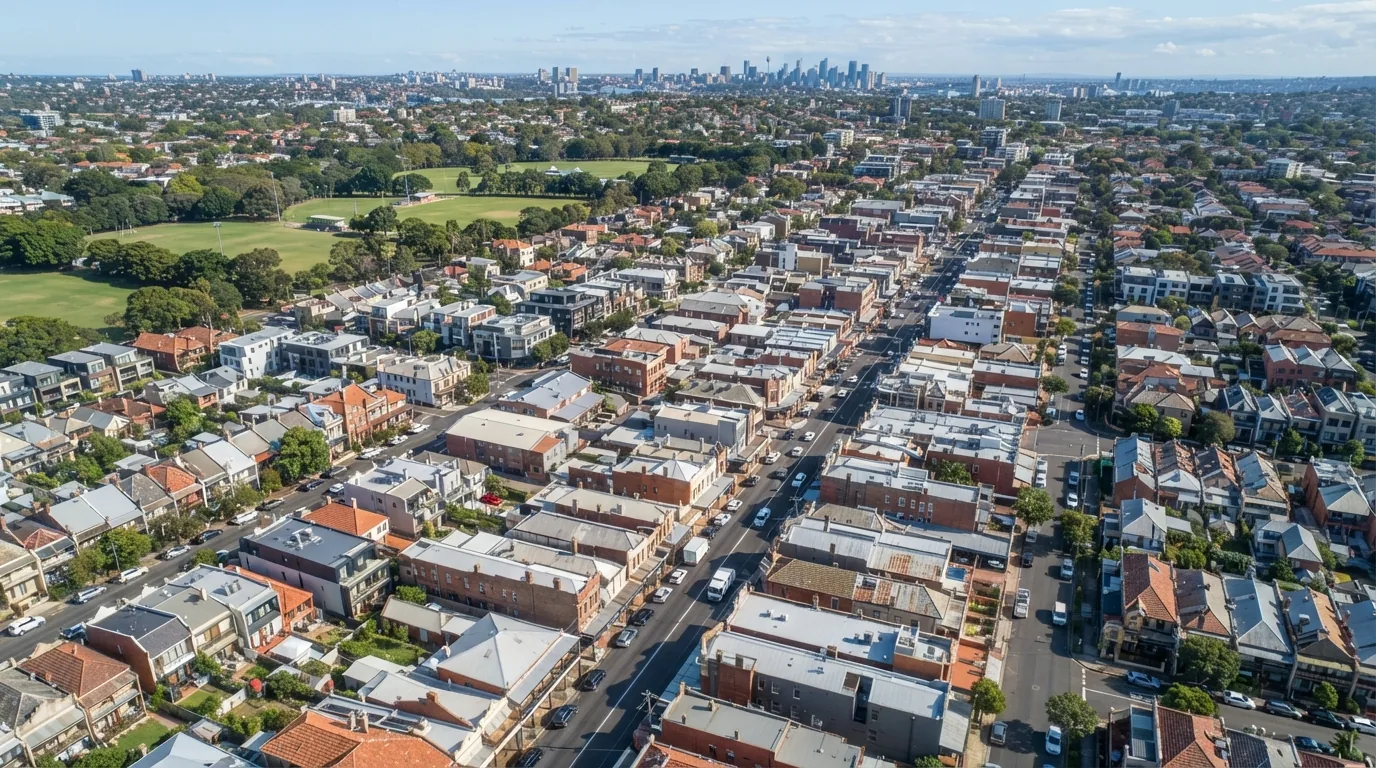
Alexandria is really two suburbs sharing a postcode. The northern streets around Alexandria Park keep their rows of Victorian terraces and small cottages, many inside a heritage conservation area. South and west of there, toward Euston Road and the Alexandra Canal, the blocks are warehouses, factories, showrooms and freight yards, from the years when Alexandria was called the largest industrial municipality in Australia. Many of those buildings are now offices, gyms or apartments, and the newer apartment blocks toward Green Square sit on former factory land.
Terrace work usually happens from a rear lane, if there is one wide enough, or straight through the house from the front door when there is not. The mini excavator goes through the back gate or not at all, and spoil often comes out by wheelbarrow to a tipper waiting in the lane. Warehouse sites are easier for trucks but bring roller doors, forklift traffic and loading hours set by the tenant. Parking on the residential streets is tight, and the tipper's spot has to be worked out before the day.
Under most of Alexandria the ground is Botany Sands, marine and wind-blown sand sitting on Hawkesbury sandstone, with clay layers through it. On old industrial land there is usually fill on top, and near the canal that fill covers what was once marshland along Sheas Creek. In parts of the suburb groundwater sits only a metre or two down, so a deep footing hole can fill overnight. Fill left by old industry can also be contaminated, and anything that looks or smells wrong is set aside for testing.
What we do here most
What Alexandria keeps needing
Each job here meets either an old building that cannot take much disturbance or ground that a century of industry has dug, filled and built over.
Plumbing & Drainage Trenching
Replacing cracked clay stormwater behind a terrace
Terrace stormwater often runs in old clay pipe under the back courtyard and out to the lane or the street gutter. When it cracks, roots get in and the courtyard floods in heavy rain. We open a trench along the old line, often by hand where the walls are close, lay new pipe to grade on bedding sand and backfill it. A plumber makes the connections and signs off the work.
Slab Excavation
Cutting a warehouse slab for new bathrooms and drainage
Turning a warehouse into offices or apartments almost always means new toilets and kitchens where the old floor was solid concrete. The slab is saw cut, broken out and removed in sections, then the trench for the new drainage is dug in the sand below. Thick industrial slabs can carry heavy reinforcement, so the cut lines are planned with the builder first. Spoil goes out through the roller door to the tipper.
Footing & Foundation Excavation
Footings for a terrace extension beside a party wall
A rear extension on a terrace sits next to a shared wall whose old brick footing may be very shallow. In Alexandria's sand, a footing hole dug too close to that wall can let the sand run out from under it. We dig to the engineer's footing plan in short sections, keep each hole open for as little time as possible, and stop if groundwater comes in faster than the plan expects.
Underground Electrical Infrastructure Installation
Conduit and pits for warehouse car park chargers
Converted warehouses and newer office buildings keep adding car chargers, gate power and lighting in their car parks. We cut the trench through the hardstand, lay the conduit at the required depth, set the pits and reinstate the concrete or asphalt. The route is planned around the old services that industrial sites tend to have under them. An electrician pulls the cable, connects it and tests it.
If it is urgent
If a trench floods or a wall moves in Alexandria
- 1Keep everyone back from the trench edge and away from any terrace wall that stands beside the hole.
- 2Do not pump the water out into the gutter or keep digging, because pulling water out of loose sand can draw sand from under the footings next door.
- 3When you call us, say whether the site is a terrace or a warehouse, how far the hole is from the nearest wall, and whether the water in it is still rising.
Common questions
Frequently Asked Questions
What size jobs do you take on?
Small residential jobs through to larger civil and infrastructure work. A single trench across a front lawn, a set of footings for an extension, a bulk cut for a new slab and the underground services for a commercial site are all jobs we do.
Can your machine get into a narrow side passage?
Usually, yes. A mini excavator fits through most gates and side passages that a larger machine cannot. Send a photo of the narrowest point with a tape measure across it, and we will tell you whether the machine fits or whether that part has to be dug by hand.
Do you connect the power, water or sewer once the trench is dug?
No. We do the civil side: digging the trench to depth, bedding, laying the conduit or pipe, installing pits, backfilling and reinstating. The connection, testing and sign-off are done by an electrician or a plumber, and we work around their timing.
What is non-destructive digging, and when do I need it?
It means opening the ground with water and vacuum, or by hand, instead of a bucket. It is used where cables, gas lines or water mains are close to the dig, so they can be found and exposed without being damaged.
Do you take the spoil away?
Where the job calls for it, yes. Spoil is loaded into a tipper and taken off site. Where it can be reused on the block for backfill or levelling, we talk about that with you first, because it changes how much leaves the site.
What if you hit rock or old fill?
How deep the rock sits, and whether there is buried rubble or old fill, only shows once the bucket is in the ground. If we find something that changes the job, we stop and tell you before the work carries on.
Do you check for underground services before digging?
Every time. We get the underground service plans for the site before we dig, through Before You Dig Australia, and anything close to the line is exposed by hand or vacuum before a machine works near it.
Do you do strip outs and demolition?
Yes, including bathroom strip outs and wider internal strip outs. If old sheeting or materials might contain asbestos, they have to be tested before anything is broken. If that is the case, we stop and tell you, because we do not remove asbestos.
Can you level a yard and lay turf?
Yes. Landscaping covers clearing, levelling and grading the ground so water runs away from the house, building up garden beds and edges, and laying turf once the ground is ready.
Do you need the engineer's plans?
For footings, slab cuts and bulk excavation, yes. The engineer's plans set the depth, width and position of what we dig. For a trench or a landscaping job, a site plan or a few photos are usually enough.
Can I call you outside business hours?
Yes. We answer the phone at any hour, every day. If a trench has collapsed or a pipe has been hit, tell us the suburb and what has happened, and keep people back from the edge until we talk.
Which areas do you cover?
We travel across Sydney, from the CBD and inner south to Parramatta, Western Sydney, the south-west, and St George and Sutherland. If your suburb is not on our list, ask anyway.
Everything we do here
Services in Alexandria, NSW
These services are planned for Alexandria's two kinds of site: tight terraces with fragile walls, and industrial land with sand, fill and shallow water under it.
Local, and on the phone
Getting a quote in Alexandria
Send us a photo of how we get in: the rear lane gate with a tape measure across it for a terrace, or the roller door and car park for a warehouse. If there is a geotechnical report that gives the groundwater depth, send that too, because it decides how deep we can dig before the hole needs pumping.
0485 057 31224 hours a day, 7 days a week
Not urgent? Send us the job instead