
Excavation contractor in Cronulla, NSW
Digging in Cronulla's sand and sandstone
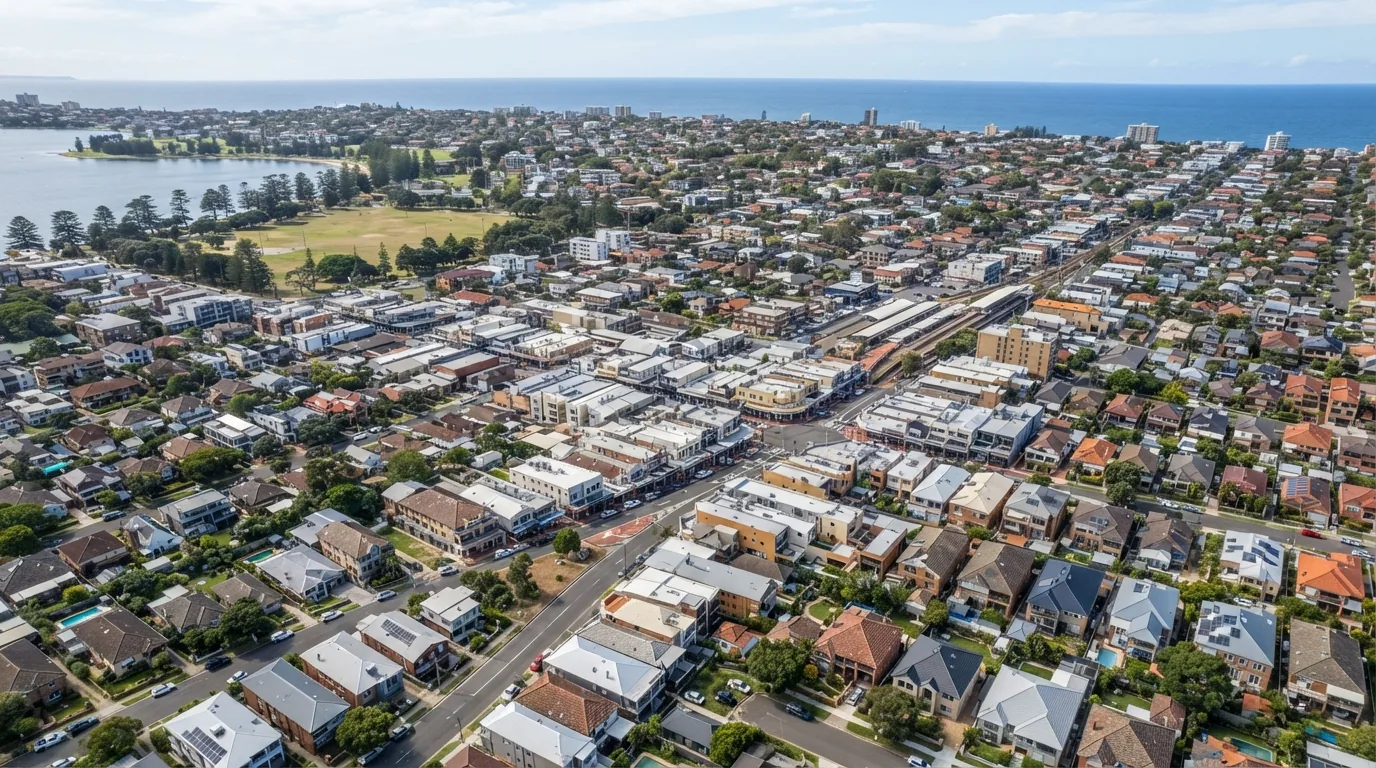
Cronulla sits on a peninsula with Bate Bay and the surf beaches on the east, Port Hacking to the south and Gunnamatta Bay to the west. The streets near the station, the Kingsway, Gerrale Street and the beachfront are lined with unit buildings, and older blocks there are being replaced with new apartment buildings. Toward Port Hacking the housing is mostly freestanding homes, some of them on the water. Most of our work is around unit buildings, strata properties and the houses between them.
Space is the problem in Cronulla. Unit blocks often have only a narrow strip between the building and the boundary, and the way to the back is through a car park with a height bar or along a side path. Parking near the beach and the mall is limited and busy, especially on summer weekends, so the tipper is booked for early mornings and spoil may be moved in short trips. Work in the street or on the footpath needs Sutherland Shire Council's approval before the truck or bin goes there.
Much of Cronulla is built on sand, the southern end of the dune country that runs up through Wanda and Kurnell, sitting over Hawkesbury sandstone. On the headlands and along parts of the foreshore the sandstone comes to the surface, and a section of cliff beside the Esplanade is heritage listed. Sand digs fast, but trench walls run once they dry out or get saturated, and groundwater can sit within reach of a basement or a deep pit. On one block the sand goes deeper than any footing needs, and on the next the rock is under the lawn.
What we do here most
What Cronulla keeps needing
Sand that will not hold a vertical wall is the pattern behind all four jobs, and sandstone turns up often enough to change the plan halfway.
Underground Pipe Installation
A new stormwater pipe through sand to the street
New homes and unit renovations in Cronulla often need a new stormwater line from the downpipes to the kerb. In dry sand the trench is battered back or shored so the sides stay put, then the pipe is laid on bedding to grade. Because sand settles if left loose, the backfill is compacted in layers right up to the surface. A plumber completes the connections and signs off the work.
Vacuum Excavation
Vacuum digging around services beside a unit block
The strip between a unit building and the footpath can hold water, gas, power and communications all within arm's reach. In sand, a shovel or bucket pulls down more ground than you meant to move, which can leave a pipe hanging unsupported. Vacuum excavation loosens the sand with air or water and lifts it out through a hose, so the hole stays the size you need. It also lets us dig hard against the building.
Footing & Foundation Excavation
Pier holes that have to find rock under sand
An extension or new home in Cronulla often has footings the engineer wants on sandstone, but the depth of sand above it changes across the block. We dig each pier hole until rock is reached and the engineer can inspect it, keeping the sand from running back in. Where the rock is much deeper than the plans show, we stop and the engineer decides the next step.
Plumbing & Drainage Trenching
Drainage for a ground-floor unit courtyard
Ground-floor units near the beach can take on water when a courtyard has nowhere to drain. We trench for a new drainage line out to the existing stormwater system, working through pavers and sand and often beside the building's footings. Spoil is bagged and carried out because there is rarely machine access. The strata committee approves the work on common property before we start.
If it is urgent
If sand runs in or a pipe is hit in Cronulla
- 1Keep everyone back from the edge of the hole, because dry or saturated sand can slump suddenly and widen it.
- 2Do not dig out a buried tool or step into the trench, and do not touch a cable the sand has exposed.
- 3When you call us, tell us the street, whether it is a unit building or a house, and whether the hole is still in sand or has hit sandstone.
Common questions
Frequently Asked Questions
What size jobs do you take on?
Small residential jobs through to larger civil and infrastructure work. A single trench across a front lawn, a set of footings for an extension, a bulk cut for a new slab and the underground services for a commercial site are all jobs we do.
Can your machine get into a narrow side passage?
Usually, yes. A mini excavator fits through most gates and side passages that a larger machine cannot. Send a photo of the narrowest point with a tape measure across it, and we will tell you whether the machine fits or whether that part has to be dug by hand.
Do you connect the power, water or sewer once the trench is dug?
No. We do the civil side: digging the trench to depth, bedding, laying the conduit or pipe, installing pits, backfilling and reinstating. The connection, testing and sign-off are done by an electrician or a plumber, and we work around their timing.
What is non-destructive digging, and when do I need it?
It means opening the ground with water and vacuum, or by hand, instead of a bucket. It is used where cables, gas lines or water mains are close to the dig, so they can be found and exposed without being damaged.
Do you take the spoil away?
Where the job calls for it, yes. Spoil is loaded into a tipper and taken off site. Where it can be reused on the block for backfill or levelling, we talk about that with you first, because it changes how much leaves the site.
What if you hit rock or old fill?
How deep the rock sits, and whether there is buried rubble or old fill, only shows once the bucket is in the ground. If we find something that changes the job, we stop and tell you before the work carries on.
Do you check for underground services before digging?
Every time. We get the underground service plans for the site before we dig, through Before You Dig Australia, and anything close to the line is exposed by hand or vacuum before a machine works near it.
Do you do strip outs and demolition?
Yes, including bathroom strip outs and wider internal strip outs. If old sheeting or materials might contain asbestos, they have to be tested before anything is broken. If that is the case, we stop and tell you, because we do not remove asbestos.
Can you level a yard and lay turf?
Yes. Landscaping covers clearing, levelling and grading the ground so water runs away from the house, building up garden beds and edges, and laying turf once the ground is ready.
Do you need the engineer's plans?
For footings, slab cuts and bulk excavation, yes. The engineer's plans set the depth, width and position of what we dig. For a trench or a landscaping job, a site plan or a few photos are usually enough.
Can I call you outside business hours?
Yes. We answer the phone at any hour, every day. If a trench has collapsed or a pipe has been hit, tell us the suburb and what has happened, and keep people back from the edge until we talk.
Which areas do you cover?
We travel across Sydney, from the CBD and inner south to Parramatta, Western Sydney, the south-west, and St George and Sutherland. If your suburb is not on our list, ask anyway.
Everything we do here
Services in Cronulla, NSW
These services are planned around Cronulla's mix of loose sand and sandstone, and the little room left between its buildings.
Local, and on the phone
Getting a quote in Cronulla
For a unit building, send us the strata manager's contact details and any rules about trades on common property. For a house, send the geotechnical report if you have one, because the depth of sand over the rock decides how the trench walls are held and how far down each footing goes.
0485 057 31224 hours a day, 7 days a week
Not urgent? Send us the job instead